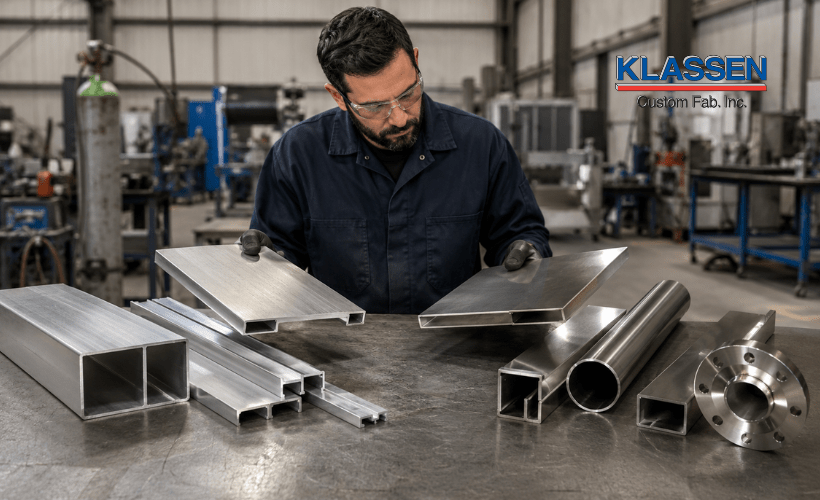
Your choice of aluminum or stainless steel for custom fabrication sets the weight, cost, service life, and performance of the finished part. Both metals cut cleanly, form accurately, and weld well. They part ways under load, in wet conditions, and on the shop floor. This guide shows where each metal wins and how your material choice moves the budget and the schedule. Klassen Custom Fabricating works with both every day in our 65,000 square foot Windsor fabrication facility, and these questions reach us on nearly every metal fabrication quote.
How the Two Metals Differ
Aluminum is light. Its density sits near 2.70 grams per cubic centimetre, roughly one third that of steel. The moment aluminum meets air, it grows a thin oxide skin that protects the surface below. Aluminum also has strong electrical conductivity, about 60 percent that of copper at one third of the weight. That combination suits enclosures, heat sinks, and electrical hardware.
Stainless steel is an iron alloy holding at least 10.5 percent chromium. The chromium builds a passive film on the surface, and that film rebuilds itself after a scratch. Most fabrication grades are austenitic stainless, which means they also contain nickel for better weldability and easier forming.
Aluminum Grades Used in Fabrication
The grade matters more than the metal name. 5052 is a marine-friendly aluminum alloy. It bends tightly without cracking, so it suits formed enclosures and guard panels. 6061 is an aerospace-grade alloy with higher tensile strength and excellent machinability, which fits frames, brackets, and machined plates. 3003 forms deeply at a lower cost.
Stainless Steel Grades Used in Fabrication
304 covers most work, including food-grade applications and interior equipment. 316 adds molybdenum, which resists chlorides and processing chemicals better. 430 costs less but offers reduced machinability, so keep it indoors and dry. Ask your fabricator for a mill test report. That document proves the delivered alloy matches your drawing.
Strength, Weight, and Tensile Strength
Aluminum weighs about one third as much as stainless steel at the same thickness. That gap alone decides many projects. Lighter parts cut strain injuries and speed installation, so aluminum suits lift-off guard panels, mobile carts, and any assembly that needs frequent disassembly.
Stainless steel wins on structural performance. Tensile strength measures the pull a metal takes before it breaks. 304 reaches roughly 515 MPa, while 6061-T6 sits nearer 310 MPa. Stainless is also about three times stiffer, so it bends less under the same force. You can thicken aluminum to match a thinner stainless part, but the weight savings shrink and the cost climbs.
Where Carbon Steel Fits the Comparison
Many buyers weigh these two metals and never price carbon steel. That omission costs money. Carbon steel gives the highest tensile strength per dollar of the three. A36 structural grade is the default for heavy weldments, mezzanines, and construction framing, and it welds and machines easily.
Carbon steel rusts, so it needs a coating. Hot dip galvanizing dips the part in molten zinc and buys outdoor carbon steel decades of service. That makes galvanizing the standard for railings, structural frames, and anything left in the weather. A powder coat finish adds colour, chemical resistance, and a harder surface than liquid paint. Some projects use both, with galvanizing underneath and a powder coat layer on top.
Galvanizing is not an option for aluminum or stainless steel, since neither metal needs zinc. These finishes work on all three. A galvanizing and powder coat combination often beats a full stainless build on cost efficiency and matches its performance in service.
Corrosion Resistance in Ontario Conditions
Southwestern Ontario is hard on metal. Parts face freeze-thaw cycles, road salt, humid summers, and repeated wash-down cleaning. Both metals resist corrosion, but they fail in different ways.
Aluminum never rusts. It does pit in salty air, and it corrodes fast where it touches dissimilar metals while wet. Isolation washers, anodizing, or a coated barrier stops that.
Stainless steel handles chlorides, acids, and repeated sanitation better. 316 suits food processing plants under Safe Food for Canadians Regulations, waterfront equipment, and outdoor assemblies hit by winter salt. Welding burns off the protective film near the joint. Passivation, a mild acid treatment, restores it, and skipping that step is a common cause of early staining.
Cost, Lead Time, and Total Project Budget
Aluminum usually costs less per sheet than stainless steel, though its price moves with commodity markets and can shift between quotes. Stainless costs more per pound, and the finished part weighs more, so the total climbs twice.
Material price is only part of the number. Weigh these factors on every fabrication project:
- Cutting speed: reflective aluminum and thick stainless plate need different laser settings and cycle times.
- Welding labour: aluminum demands more skill, tighter heat control, and more fixturing to control distortion.
- Finishing: stainless often ships with a mill or brushed finish, while the other two metals need a coating.
- Freight and handling: a stainless assembly can weigh three times its aluminum equivalent.
- Service life: a 316 part in a wash-down bay can outlast a coated part by years, which lowers the annual cost.
Fabrication Methods and What Each Metal Demands
All three metals run through the same fabrication process in our shop. The settings change at every station.
Cutting and Forming
Laser cutting moves fast on stainless and carbon steel and holds tight tolerances. Aluminum reflects laser energy, so it needs adjusted power and assist gas control. Water-jet cutting adds no heat at all. That protects the temper of aluminum and the corrosion resistance of stainless, and it still holds tolerances on thick plate.
Press brake forming shows another split. Aluminum needs a larger bend radius and can crack if bent too tightly across the grain. Stainless springs back after forming, so the tool must overbend it. Part geometry drives both calls, and our operators set tooling and bend order per material instead of reusing one program.
Welding and Joining
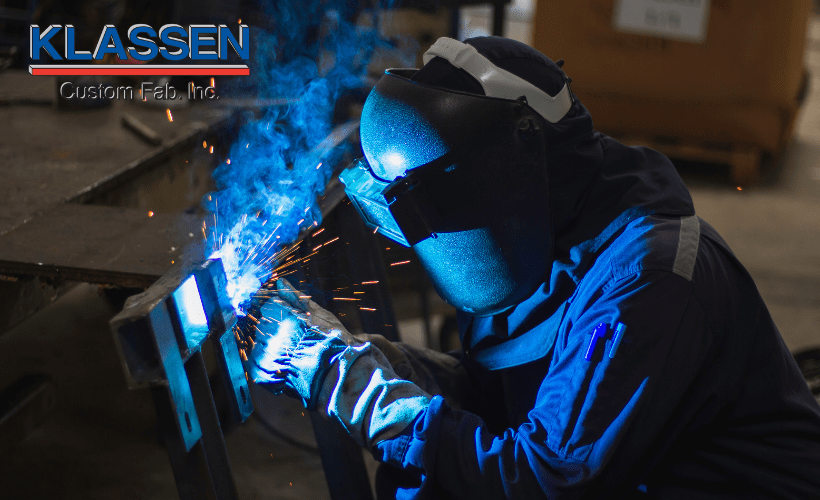
Aluminum pulls heat from the weld pool fast, and its oxide skin melts far above the base metal. It needs cleaning first, then AC TIG or pulsed MIG. Stainless holds heat longer, so the risk shifts to warping and discoloration. Our CWB certified welders work to CSA W47.1 on all three metals and plan weld order to hold tolerances on large assemblies.
Matching the Metal to the Application
Aluminum leads in aerospace structures, transport equipment, machine guarding, and electronics housings where weight or heat matters. Aerospace engineers picked aluminum decades ago for its strength per unit of weight, and the same logic applies to any panel a worker lifts by hand. Automotive plants use aluminum for light guarding and fixtures, and the automotive move to lighter vehicles keeps demand strong across Windsor-Essex.
Stainless steel leads in hydraulic tanks, coolant reservoirs, sanitary work surfaces, and outdoor installations facing years of salt. Aerospace and automotive suppliers both specify it for wash-down cells and fluid handling. Custom electrical enclosures use every metal. Aluminum suits pole-mounted and portable units, stainless suits wash-down areas, and coated steel suits general indoor plant use. All three can meet UL and CSA requirements.
Use this check before you commit:
- Define the environment, including moisture, chemicals, salt, and cleaning method.
- Set the load and deflection limits the part must meet.
- Record any weight limit for lifting, mounting, or shipping.
- Confirm the finish, hygiene, or code rule your industry follows.
- Compare the total installed cost, not the price per sheet.
Get Material Guidance from Klassen Custom Fabricating
A good fabricator reviews your drawing before cutting begins, flags any conflict between the specification and the operating environment, and prices the alternatives. That review often changes the final material and lowers the installed cost.
Klassen Custom Fabricating has served Windsor-Essex and clients across North America since 1983. We hold ISO 9001 certification and run laser cutting, waterjet cutting, CNC machining, press brake forming, CWB certified welding, and powder coating under one roof. Send us your drawings or describe the application, and our team will recommend the grade, thickness, and finish that fit the build. Whether your metal fabrication job calls for aluminum or stainless steel for custom fabrication, we deliver parts that arrive on time and perform for years.
Contact Klassen Custom Fabricating today to request a quote.
Share This Article
Choose Your Platform: Facebook Twitter Google Plus Linkedin